


by Benjamin Nyirenda
A group of leading academics and political campaign experts has begun work on a proposed Global Political Campaign Index (GPCI), an initiative aimed at developing a framework for assessing the quality, integrity and inclusiveness of political campaigns.
The initiative is being developed by the International Centre for Political Campaigns (ICPC) in partnership with the University of Cape Town’s Nelson Mandela School of Public Governance.
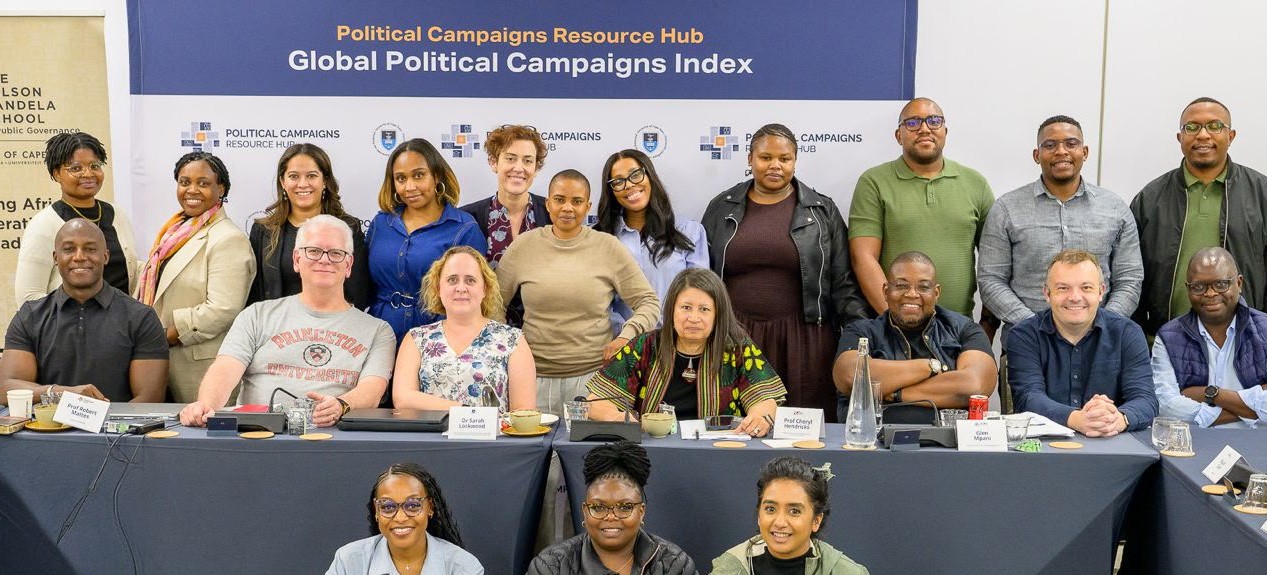
An inception meeting in Cape Town brought together academics including Harvard Kennedy School professor Pippa Norris, University of Strathclyde professor Bob Mattes, Dr Momar Dieng, Professor Sarah Lockwood and Professor Cheryl Hendricks.
The meeting is examining the proposed index’s conceptual foundations, methodology and potential contribution to the study of political campaigns. 
At the centre of the initiative is a question that campaign assessments have traditionally struggled to answer: how should the quality of a political campaign be assessed beyond whether it wins an election?
The organisers argue that election results provide only a limited picture of how campaigns engage with citizens, shape public debate and present policy choices.
Professor Hendricks said the Nelson Mandela School of Public Governance had a responsibility to approach the project with both integrity and technical rigour.
“How power is pursued matters as much as who wins it,” she said.
The proposed index is also intended to examine citizens who do not participate in elections.
Glen Mpani, Group Lead of ICPC, said an election result could establish who won, but did not necessarily show whether voters were heard, whether campaign messages were meaningful or why some people were left out of the political process.
The initiative therefore places particular attention on the *“missing voter”* — people eligible to vote who do not cast a ballot, including those who remain unregistered and those who register but ultimately do not participate.
According to the organisers, understanding non-participation requires looking beyond voter turnout statistics to citizens’ experiences, barriers to participation, distrust and deliberate abstention.
Four dimensions proposed
The framework currently under consideration identifies four proposed areas for assessment:
Integrity of conduct — whether campaigns support free and informed choice through transparent and responsible practices.
Reach and inclusion — which citizens and communities campaigns engage, and who remains outside their reach.
Substantive offer — whether campaigns present clear, specific and understandable policy commitments.
Citizen experience— whether voters encounter meaningful choices, opportunities to be heard and freedom from pressure.
The proposed methodology could draw on campaign observation, public communications, documentary evidence, citizen research and expert evaluation.
A further challenge will be determining whether campaigns can be compared fairly across different political environments, particularly where countries differ significantly in resources, institutions and access to information.
The inception meeting is also considering safeguards intended to protect the credibility and independence of the index. These include independent scientific oversight, transparent methods, disclosure of potential conflicts of interest and a clear separation between assessment and campaign advisory work.
The ICPC, which says it has more than a decade of experience in campaign work, is using the partnership with the Nelson Mandela School to subject the proposed framework to academic scrutiny.
A pilot phase is expected to test whether proposed indicators can be consistently collected and interpreted before the framework is applied more broadly.
The organisers emphasise that the GPCI remains at an early stage, with its final design to be shaped by further scrutiny, testing and academic discussion.